Why I wrote this post
Ever since I started to learn about blockchain a year ago, I actually went down the rabbit hole. Oftentimes, I stumbled upon new concepts that amplified my confusion even more. There wasn't a time where I could spend a few minutes on an article to understand a concept. It's either I had to refer to numerous articles and YouTube videos, or I would put it aside for some time and come back later.
This is mainly due to the subject loaded with technical jargons that confuse me even more. So the reason I write this article is straightforward - I will write it as if this is the first article on blockchain that I wish I could read a year ago. I hope this post will help people who are interested in this topic and people who are confused about what blockchain is to understand it better.
Let's get into the subject
What is blockchain?
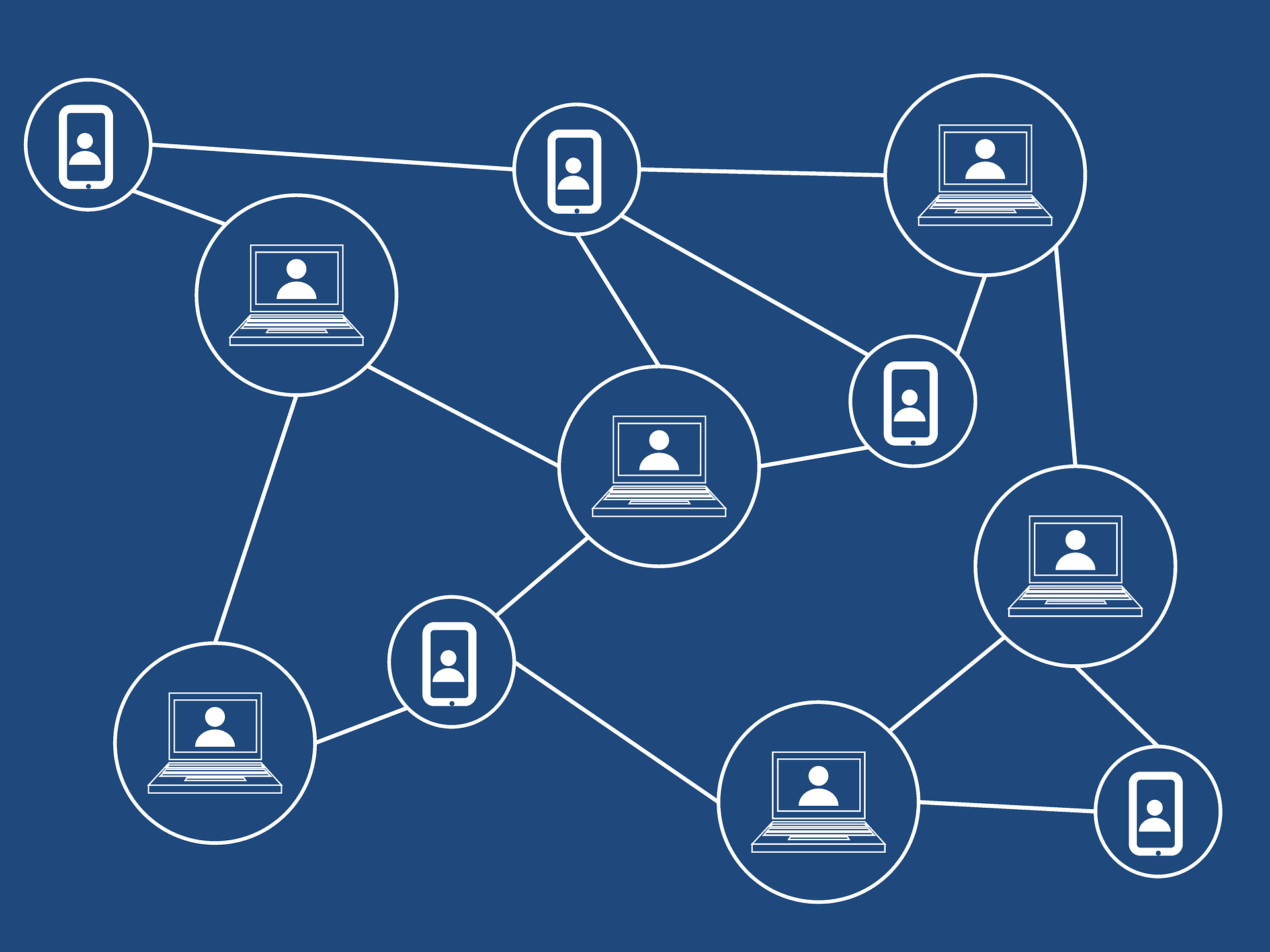
For newcomers, this will be the first question they will google to learn more about blockchain. From what I can see, the typical definition of blockchain is 'distributed ledger technology. But, what does it actually mean? If I omit the last word 'technology' to make it shorter, I am still clueless. To make sense of the definition, let's jump straight into an example.
Let's say you have three friends - Siti, Raj, and James who always settle in cash immediately among themselves after they finish with group activities. One day, Raj finds this practice such a hassle and suggests a new way to perform the transaction. His suggestion goes like this, "Instead of settling the transaction immediately, each person who wants to send money to another person will let the group know about the transaction. Then, each member of the group will record the transaction on their papers. At the end of each week, we will sit down and settle in cash among each other".
All of them agreed to Raj's suggestion. They start with RM100 in their wallet. Each time they want to transfer their money, they will inform the group of the amount and recipient. On each paper, they will write it as "Raj sends RM5 to James" or "Siti sends RM3 to Raj". At the end of each week, they will sit together and verify a list of transactions. If they are satisfied with the records, then they will sum the amount and pay each other.
Yes, we have finished with basic understanding of what blockchain is. If we want to revisit the previous technical definition i.e. distributed ledger technology, here is its breakdown:
- Distributed: Each person in the group holds the records and can see them anytime.
- Ledger: The record that contains the list of transactions.
- Technology: In the real world, the transactions take place on computers. The scenario I illustrated before is based on manual records on papers, which is not the case in the real world.
Okay, but where does the term 'blockchain' come from? Let's continue with the scenario. After they have recorded 10 transactions on each's page, they will then give that particular page a specific ID number such as "Siti-Raj-James-1". Then, the next transactions will be recorded on another page with the new ID "Siti-Raj-James-2".
On the second page, they will also include the first ID "Siti-Raj-James-1" for everyone to know that the second page is the continuation of the first page based on the specific ID. So that's where the term 'blockchain' comes from. It is a chain of blocks.
What are some issues with my example?
- What if James cheats by making up one transaction and asks Raj to write that transaction in his record?
James has the opportunity to do so. He may write 'Siti sends RM50 to James" and asks Raj to record that transaction on his paper. In return, Raj will get RM25. Siti will then amend her record and send RM50 to James.
However, they can prevent this situation by including a signature in each transaction they want to perform. This approach can stop James from writing 'Siti sends RM50 to James' in his record since only Siti can provide her signature for every transaction conducted by her.
Besides that, this problem will happen if we have only a few verifiers in the group. But in the real world, there are thousands of validators for each blockchain. In the case of Bitcoin, we can estimate that total miners are likely over one million.
- What if Siti sends RM100 to Raj and then sends RM100 to James exactly after the first transaction?
This problem is called "Double Spending" where people spend money that they no longer have. To illustrate this problem, imagine you walk into Uniqlo and buy a shirt worth RM50, then buy another shirt worth RM50 using the money you just paid to the cashier. That's the gist of the Double Spending problem. You double-spend the same money.
We hardly come across this issue if we transact using cash or the transactions pass intermediaries. But in the blockchain world where transactions happen digitally and based on peer-to-peer verification, this is a real problem.
Back to the scenario, Siti can still send RM100 to James even if she is penniless since every transaction is just another record on the paper. What makes it worse is she can borrow money from Raj and James, repay on paper (remember that she is penniless), and suddenly vanish from their lives.
If you refer to my example, that scenario will likely happen. But in the real world, Bitcoin miners will select one transaction out of all the transactions that Siti performed. Once that transaction is verified, the other transactions will be discarded. Hence, the Double Spending problem can be prevented.
What makes blockchain technology important?
To answer this question, let's take blockchain and Bitcoin as our examples. For the sake of simplifying the explanation, the former is the technology used to empower the latter and the latter is the network to transfer currency (Guess what, the currency is also called Bitcoin). And let's replace the currency that Siti, Raj, and James used previously with Bitcoin.
- Eliminate the need for third parties
By using Bitcoin, they do not have to trust third parties to perform the transactions. They can send the currency without going through banks, and the record will be publicly available for everyone to see. In the traditional financial system, they need to rely on banks to verify the transactions and send the money to the intended recipients. Say that the bank commits negligence or fraud, this will lead to trust deficit among the customers. Also, since the transactions require no intermediaries, less cost will be borne by them.
- Data Privacy
When Siti opens a bank account, the bank will store Siti's information and track each of her transactions. Fingers crossed that the bank is able to safeguard her private information. What if some anonymous hackers steal the info and sell them to the black market? It's a gone case.
In the Bitcoin network, account owners are identified by their addresses; a random sequence of 26-35 characters. The transaction details are publicly available but they are not linked to user's private information. Hence, Siti does not have to worry about her private information getting compromised anymore.
Conclusion
I hope this post can help the newcomers to understand what blockchain is and how it works. I might have oversimplified it on certain occasions, but fret not - the basics still hold. The key takeaway from this post is blockchain is a chain of blocks. Also, I have shared some videos and articles if you are interested to understand more. Next time, we will tackle other issues or explore new concepts related to blockchain.
WAGMI!
P.S. If you read this article, I really appreciate constructive feedbacks and will definitely consider them for my next write-up. If you can spare a few minutes sharing them with me, that will be awesome. Also, consider connecting with me on LinkedIn for the latest content.
Additional Resources
A simple explanation on blockchain

![Hacking Ethernaut [with Foundry] Level 3: Telephone](https://cdn.hashnode.com/res/hashnode/image/upload/v1682756143464/7f1e867d-4187-4942-842c-0c65adea2ac1.png)


